BARBARA MAHLER’ DANCES
(You can also click on the heading “Choreography and Performance” before scrolling down to the different headings.)
ESSENCE OF MY WORK
Movement is part of our everyday lives, and can be shaped and formed to realize a specific goal. It can be virtuous, and/or pedestrian. The two can be part of the same canvas, the same dance. Movement is the underlying and strongest component with which I create: designs, scenes, stories, and environments. My goal is to bring to the surface underlying emotional tones that are kinesthetically experienced by the viewer, designing tapestries that are rich, spare stark, simple, intimate. My structures are rigorous. I am interested in beauty and mystery, and story – telling, as I work to distill the meaning of a dance to its purest essence. My current trajectory includes but is not limited to rigorous improvisational and collaborative process in both in rehearsals and performance. I reference the body, my body, using pure movement and the process of its invention and investigation to create my dances.
My interest, my passion, is the body – the limitless possibilities of the body as an expressive instrument, to carry a story, express a viewpoint, depict a character, create an environment. I have pursued the form of the solo dance for many years. I think of solo dances as being in dialogue with the spaces in which they are created and/or performed, and each particular audience. Theories of physics inform us that nothing exists alone; that all things can only exist in relationship; there is no pure structure, everything is energy. In this open way is the way I approach creating solos/dances. They are given a new life with each new audience in each performance. Although all dances are created to realize a particular form or shape, to convey an event, fulfill a concept, solo dances are innately possessed of a spontaneity and flexibility that give rise to various interpretations and meanings. In the absence of other dancers, the solo dancer’s inner dialogue is the primary tool in creating and maintaining a relationship between performer and audience, while the dance itself creates the structure for the communication. The audience, an assortment of individual viewers, comes together in what I think of as a collective vision. The relationships thus created are with the self, the audience and the space. Although I know what my dances are, they acquire new life in each different circumstance. I mold and craft my dances in detail and design, and in paradox, aim for spontaneity and immediacy.
As an educator I have been teaching regularly since since 1983 – present, and as a substitute, step in teacher at the Colette Barry and Susan Klein School of Movement 1977-1979, and then at the Susan Klein School of dance- also as a substitute and step in 1979-1982. In 1983, when Susan Klein enrolled in acupuncture school, I became the main teacher,1983-2001 “Barbara was the “motor” of the Susan Klein School of Dance to quote Dianne Madden, rehearsal director for TBDC. Then for 2 years, 2001-2003 it was the at the Susan Klein and Barbara Mahler School of Dance and Movement Studies.
Since 2005, I have been an ongoing faculty member of Movement Research. Movement Research continues to provide a home base for all aspects of my research. “Barbara’s viewpoint of the well-functioning person/body is grounded in her long – standing work in the dance and movement field. Her major and most consistent sources of information have come from the study and teaching (1979-present) of Klein Technique.” My other teaching work took place in the Danish School for Moderne Dance in Copenhagen, and workshops carried me to Oregon, to Seattle, to Ohio, Limerick Ireland, Glasgow, London, Berlin, Vienna, Taipai, others.
Not too far too distant in time Performances and Workshops
Workshops and choreographic presentations with Cuerpos Intellegicia Santiago, Chile with Marcela Ortiz -Bio Bio Festival October 2019, and October 2018. Workshops of Klein Technique with Cuerpos in Santiago October 2016,2017
Workshops of Klein Technique, and on 2 occasions, Zero Balancing (1 and 2) with HORSE DANCE THEATER Taipai Tawian, June 2016-19, June 2020-22 on Zoom 2023 in person again
ZOOM Workshops with IDA, London and Tanzfabrik Berlin 2020, 2021
Queensborough Dances Festival 10th Anniversary 2023—many outdoor performances of queens based choreographers, in parks, in plazas. free and open to the public,,, See below for larger history
Fertile Ground at Green Space – coming Sunday September 24, a solo; also a trio with Jessica Winograd and Emily Climer November 2021, and a solo for myself, November 2022
New Dance Alliance -NDA 30 Anniversary series at Abrons Arts Center – 2017,
NDA Performance at University Settlement June 2019, 2016
Movement Research at the Judson Church – March 2019, Fall 2016,Winter 2015
University Settlement, NYC June.-Solstice Summer Dances 2016,-2019
Dance in Process at the Kitchen w Karen Bernard May 6-7 – 2016
Queensboro Dance Festival – 2015-2020, 2022 – Performances, classes, workshops all over Queens for Queens Based Artists- always an interesting, enlivening experience
Brooklyn Studios in Fall, Winter for Dance ArtistResidence/ Performance April 2017
Brooklyn Studios for Dance, December 2015
Dixon Place “crossing boundaries” October 2015, 14, 13, 12——Spring 2016-18
NDA Performance Mix at HERE June 2015
TAKE ROOT at Green Space/DANCE ENTROPY February 2015
Wassaic Dance Festival August 2015
Santa Barbara, CA – ARTBARK July 2013, 2014
Pieter Space, LA 2014 wArtBark
Performances at the JUDSON CHURCH-Movement Research Presenting Series – January 21 2013
Breaking Ground Dance Fest, Tempe Arizona January 2013 with Master Classes at the Festival and Arizona University-somatics and choreography; movement and how to own it; beyond technique
Performance Mix NDA (The Flea) and Spring Blooms (Green Space, LIC):-April 2013
Arts Educator Awards Presentation -Brooklyn Arts Exchange-March 28, 2013 -fundraiser and awards dinner
IDA -Independent Dance Agency London, England 2014/15
State School of Modern Dance Copenhagen, Denmark – Ongoing Guest Faculty 1994-2015
Berlin=Annual Workshops since 2008- Labor Gras; 2008-10, Schwelle 2010-15, Tanzfabrik 2016-2021 (2020-21 on Zoom
Empire State, SUNY, adjunct evaluator 2012, 2015
Guest Teacher – Hunter College, CUNY 2002-2012
Minneapolis – Teaching, Performing New Dance Lab, The U, Hennepin Center for the Arts,-1992- 2018
Teaching Klein Technique, Performing, Creating
Recipient of a Sage Cowles Land Grant in 1999
Zenon Dance Company School, MPLS, MN – May 2012
Research Residency in Gotheburg, Sweden- April 2012: gathering of material, and creation of solo studies for myself and others; creating material for late 2012-13 dance works.
LEAP program- October 2011-June 2012. Supported by the Queens Council for the Arts. It culminated in a performance with chosen choreographers at La Guardia College, Queens, June 2012.
Teaching and Performance Residency in Valpariso and Santiago, Chile – 2011- //www.gam.cl/danza/barbaramahler-
Zenon Dance Company School July 2011
Vanessa Smith Pilates-Glasgow, Scotland June 2011
Berlin at Labor Gras 2008-9,Schwelle 7 July 2010, November 2011, September 2012-2015
RAD Festival, Kalamazoo, MI-performance and master class March 2012, 2014-16
Sundays at 3 – February 2012 – A curated series at the 92 Street Y, NYC. role-choreographer, performer and curator. Support from the Harkness Dance Center, and Hunter College Alum Consortium
Danse Alliensen, Stockholm and Gothenburg, Sweden – December 2005, May 2006, June 2009, May 2010
Dancing People Company-Ashland Oregon -June and October 2009, June 2010, June 2011-workshops and informal performances.
Lane Community College,-Guest Artist-Eugene, Oregon
SFIDA-Guest Teacher/Artist July 2009
Guest Artist/Faculty at Hunter College, NYC 2000-20011-including choreography for Student Dance Company
EDUCATION
MFA in Dance and Choreography –University of Wisconsin/Milwaukee 2007
Master Teacher of and student of Klein Technique 1983-present. 1989 – Baltimore School of Massage
1989 – Faculty and Practitioner of Zero Balancing- continuing studies/CEU’s
BA in Dance and Art Hunter College 1977
TEACHING -2004-PRESENT
Consistent ongoing classes in NYC, September-August, as ongoing faculty with Movement Research. Additional classes take place at various studios in the New York area.
Ongoing Faculty with The Theater School Copenhagen Denmark 1994-2015
Intensive workshops as part of Movement Research’s’ MELT series for summer 2008, winter and summer 2009, summer 2010, 11, 12,13,14,15,16 – 22
Member of the ARTIST’S ADVISORY BOARD OF BAX – Brooklyn Arts Exchange
1989- PRESENT
Senior Faculty and Certified practitioner Zero Balancing- a hands on Body Work Modality.
1983-PRESENT Ongoing and consistent study in the hands on healing work, Zero Balancing – Originator Dr. Fritz Smith
1977- PRESENT Immersion in, contributor to, and Master Teacher of Klein Technique. Student 1977-80, Teacher 1980-83. Certified, Assistant Director and Main teacher at the Susan Klein School of Dance and Movement Studies, NYC 1983-2002
Movement Research, -onehundredgrand, Brooklyn Studios for Dance, Ainslie Street Studio, – ongoing
CERTIFICATIONS IN – Zero Balancing as faculty and practitioner, Connective Tissue Massage (Bindegewebsmassage), Klein Technique .
Supportive Studies in Touch for Health, Applied Kinesiology, Zero Balancing, Feldenkrais, Yoga and Meditation, BMC (with Gail Stern and Jenny Kapular, Roseann Spradlin), Connective Tissue Therapy (with Theresa Lamb), Modern and Contemporary Dance, Pilates, Improvisation, Compostion, Dance Technique of all forms
A Special shout out to Andrea and Ernesta Corvino without whom the PANDEMIC would have been less survivable! as I have immensely enjoyed the challenge of Ballet, on Zoom for 3 years
A thank you, to Gloria McClean who has re-ignited my Hawkins interest since 2016
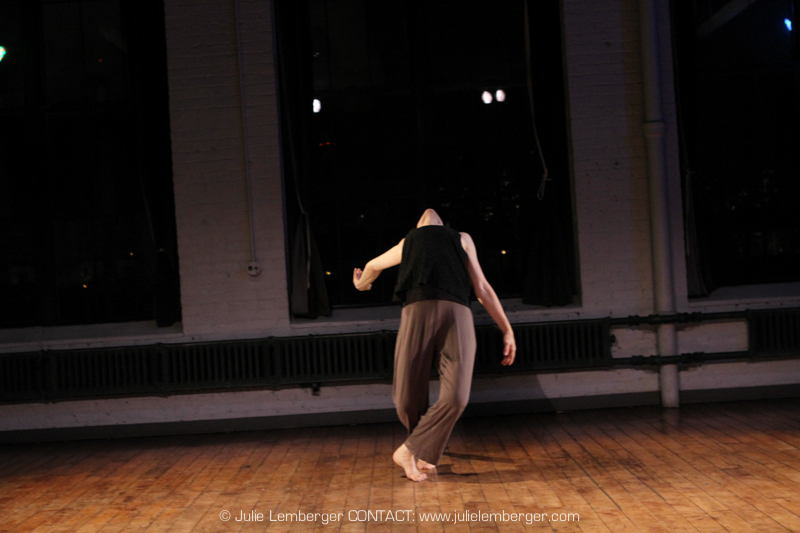
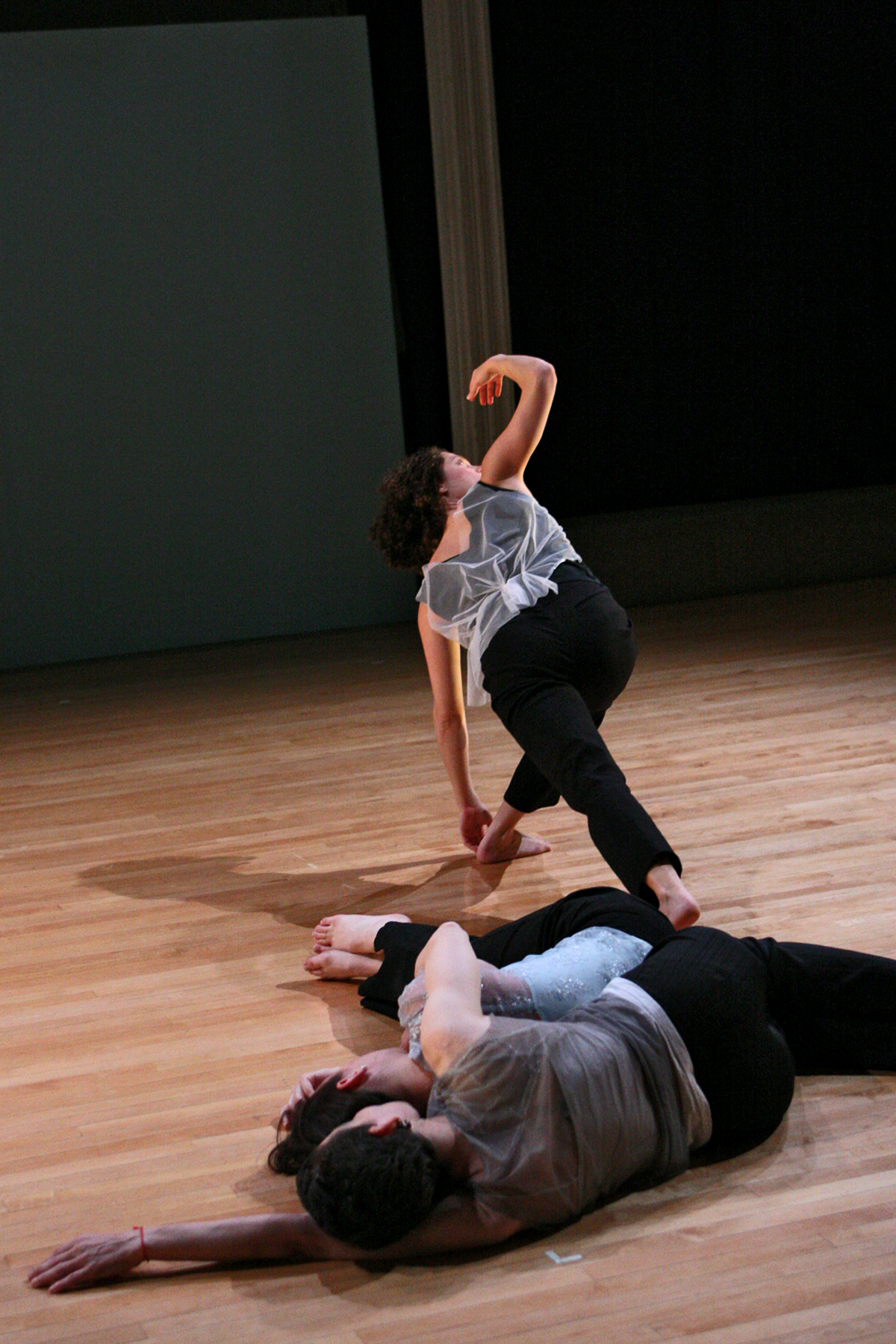
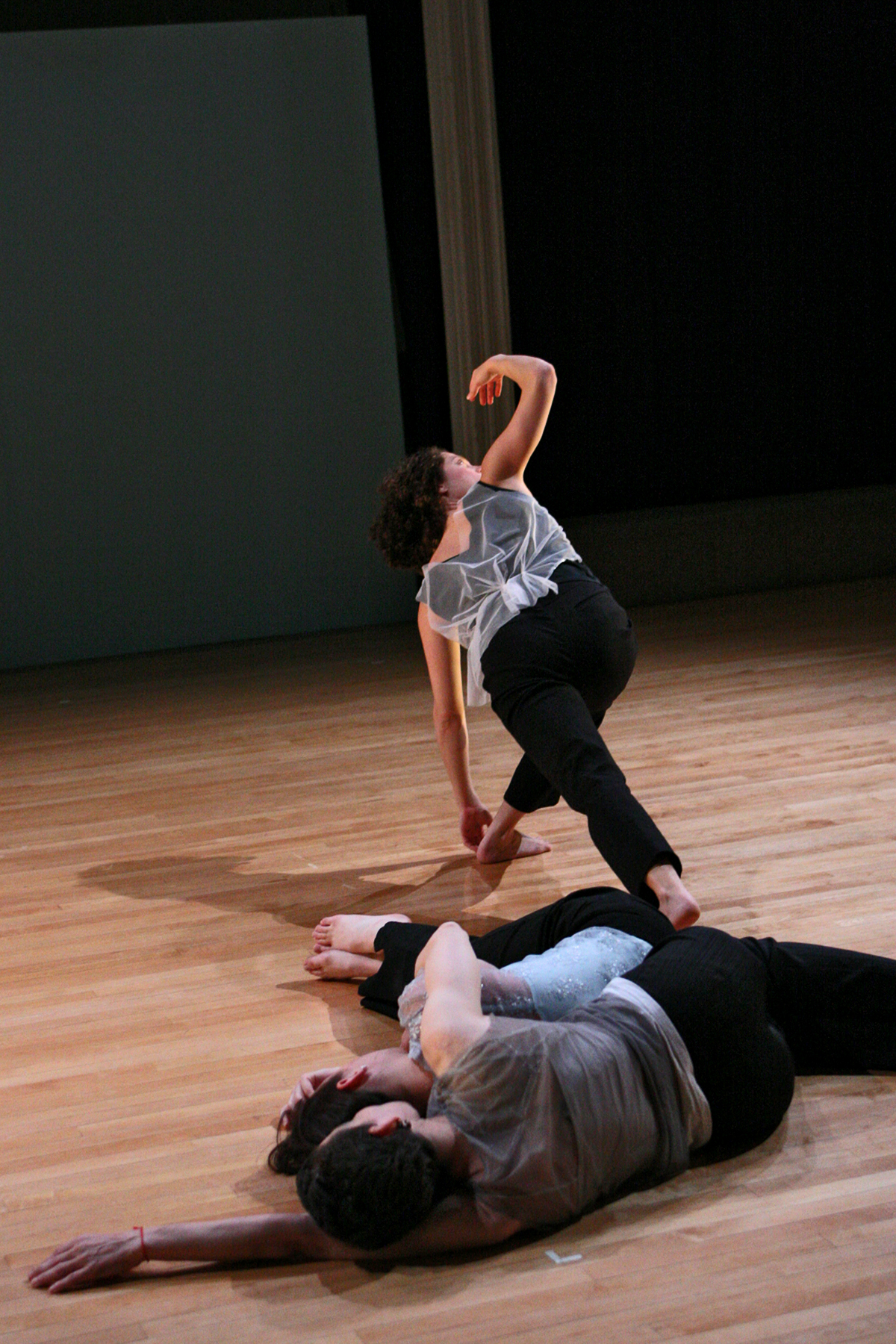
photo- “Precipice” by Julie Lemberger
Some Other Choreographies. 2006-2015
2015 “IT OcCurS to mE”created with support from the NDA summer residency program August 2015 and generous support from Wilson College, PA
2013- 2014 PRECIPICE
2012 OBSTACLES solo-first performed at Dixon Place/Crossing Boundaries
2011-12 TAPESTRY solo – presented by Dixon Place, Green Space (LIC), the Harkness Dance Center at the 92 Street Y and the duet NAVIGATING THE PATH-92 St. Y Harkness Dance Center Sundays at Three, Hatch, Green Space Blooms
2012 NAVIGATING THE PATH -presented at Sundays at 3 92 St. Y; Green Space Blooms, LIC
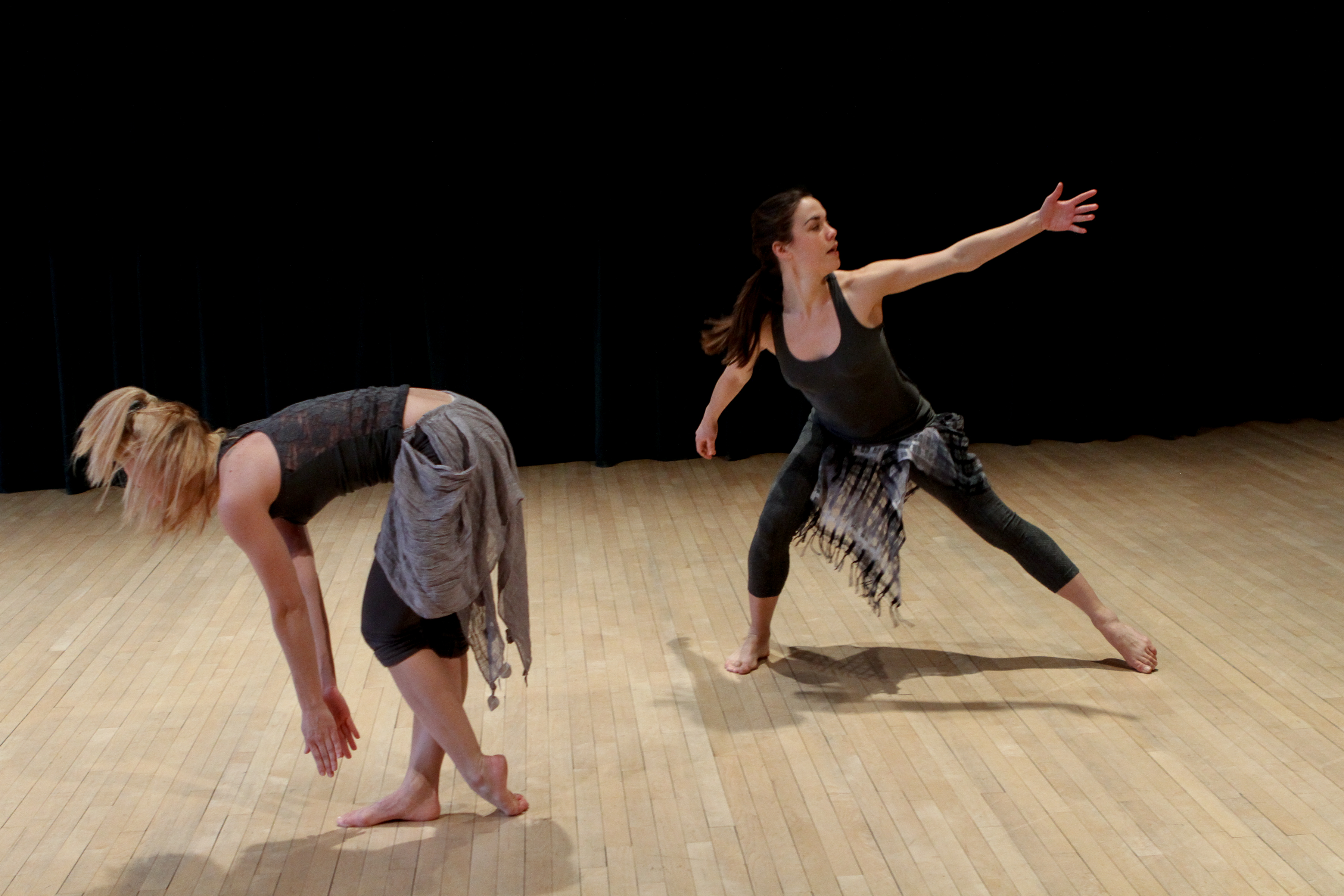
with Jamie Chandler and Jamie Graham..2012
2011-12 NUE SOLO – presented at Hunter College Dance Alum Performance (NYC), 2011; La Guardia Community College w Nancy Allison (LEAP Program)2012
2010-11 A Shared Evening of NEW DANCES – Green Space, LIC February 2011 – THE GROUND UNDERNEATH (solo), ETCHED SKETCHES (trio)
THE GROUND UNDERNEATH has also been performed (2011) in Chile, during the Government Sponsored workshop w GAM in Santiago,
at the the 92ST Y with Ann Blumenthael and Dancers, and as part of Sundays at 3, 2011, restaged with guest performer Rebecca Alson-Milkman.
2008-10 DISPLACED DAMSEL – Dancing Divas Series at LA MAMA, NYC; Green Space Spring Series (L.I.C., NY) SPRING BLOOMS, curated by Valerie Green May 2009; AMERICAN DANCE GUILD Annual Performance; WESTFEST at the Merce Cunningham Studio May 2010 Studio with guest performer Alissa Horowitz; 25 ANNIVERSARY CELEBRATION OF THE WOW CAFE, curated by Jen Abrams – “Epigenesis”, MAY 2010; DUMBO Festival Fall 2o1o, Puebla, Mexico – Performatica; LaborGras, Berlin; Ashland, Oregon-Dancing People Studio Showing, and the Seattle Festival of Improvisational Dance
dancer: Alisa Horowitz

DANCE OF SCATTERINGS -Ulla’s House, Brooklyn NY; Panetta Studio, DTW studios presented by Movement Research WINTER 2009
WE DO WEDDINGS TOO -August 2009 at Dixon Place; WOMEN MAKING HISTORY- 92 ST. Y’s 75 Anniversary Season; TAKING ROOT, at Green Space, LIC, WAXWORKS, Brooklyn, NY
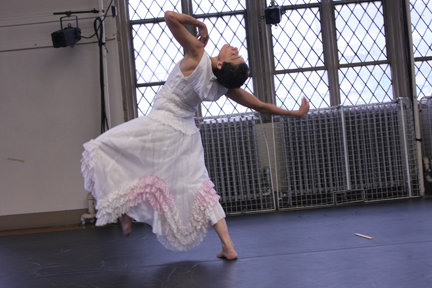
2008-09 SHORTS – a trio based on the concept of the short story – November 2008 @ Judson Church as part of the Movement Research Presenting Series; January 2009 as part of the DNA APAP Invitation series; February 2009 presented by the Hunter College Dance Department (CUNY, NY), Green Space’s new series TAKING ROOT, “an evening of new and used dances” curated by Valerie Green-September 2oo9 and New Dance Alliance’s (K.Bernard) Spring 2009 Season. Presented in excerpted form at the DUMBO Dance Festival in Brooklyn, NY, the American Dance Guild’s Fall Annual concert and December 2009 as part of the Harkness Center / 92 Street Y’s 75 Anniversary in Dance.
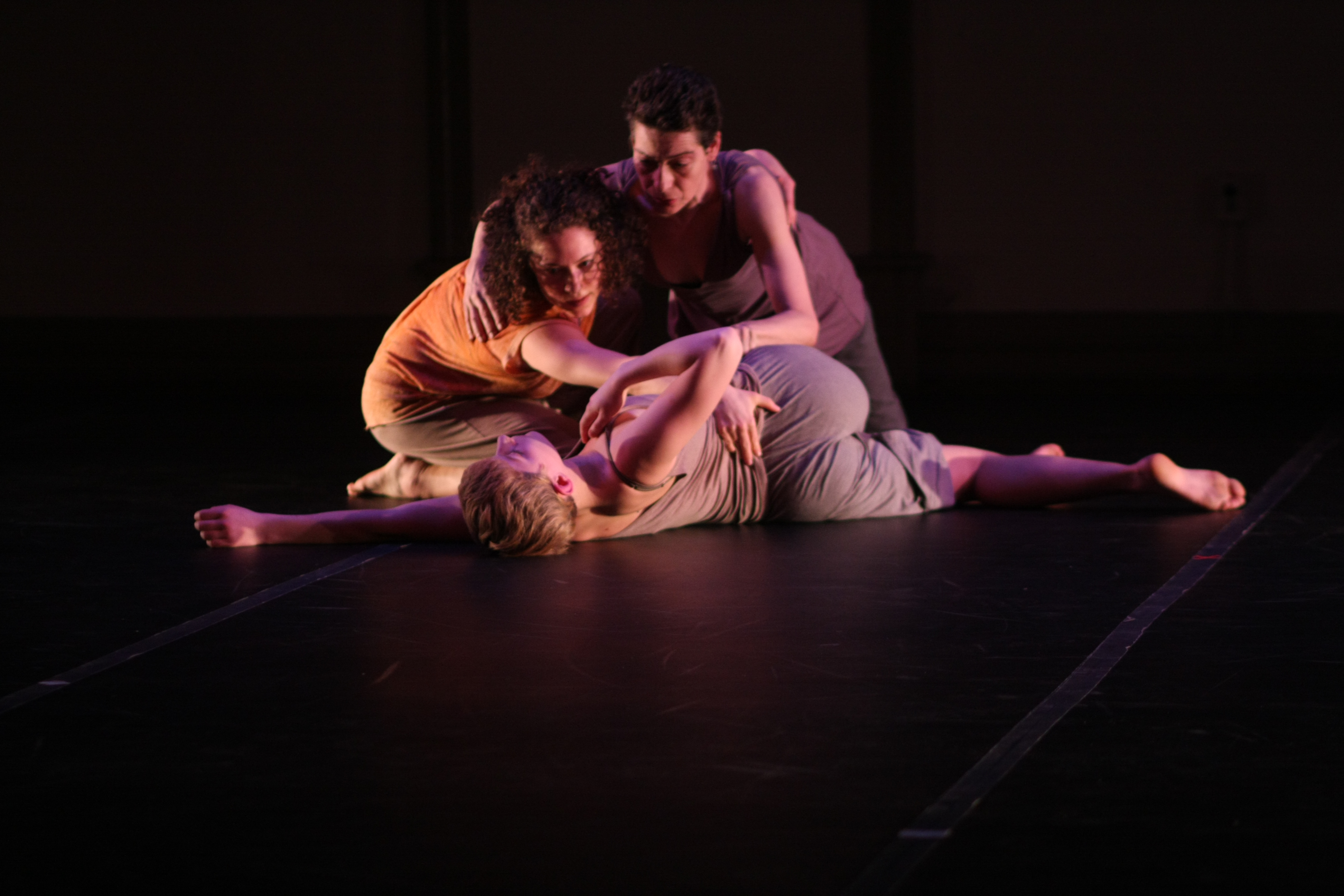
Barbara Mahler….Shorts with Cara Heerdt and Jessica Winograd
2008 WALLFLOWER – A duet, as part of the WET series at the West End Theater in NYC, curated and presented by David Parker March 2008, and as part of TEA DANCES, a series curated and hosted by Jody Sperling May 2008.
Barbara Mahler and Rachel Thorne Germond
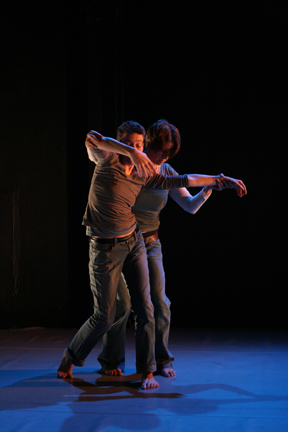
Bella’s Dance 2001 photo by Rachel Thorne Germond
photo by Rachel Thorne Germond
2007 THERE’S NO PLACE LIKE HOME – a full evening of solos, duets, trios and film presented by Danspace Project at St. Mark’s Church.
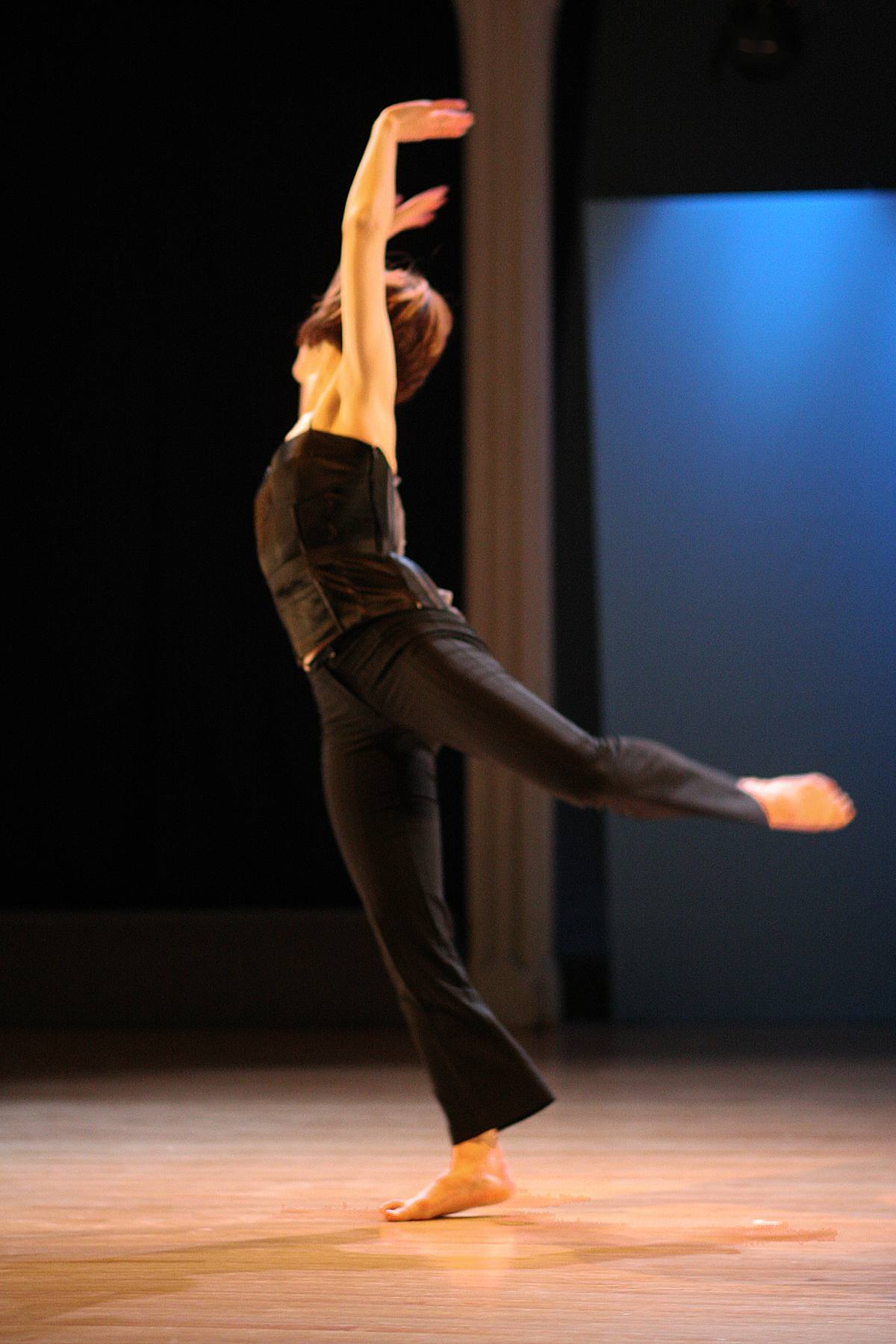
Donna Costello photo Julie Lemberger
2007 HERSTORY @BAX PRESENTS- a trio including video-an abstract tapestry
2007 AGENDA – A duet exploring ideas of gender roles and stereotypes
Dances created with support from the Movement Research Artist in Residence Program 2006-8, Danse Alliansen in Sweden, Hunter College alumni programs, 92 St. Harkness Dance Center space grants, and Ohio State University.
As an ongoing teacher at Movement Research since 2004 and an Artist in Residence 2000-02 and 2006-08, Movement Research continues to provide a home base for the development of my artistic visions and products.
photos:Julie Lemberger right -Jamie Chandler and Julianna Tilbury in “Etched Sketches” 2011. left-Barbara Mahler
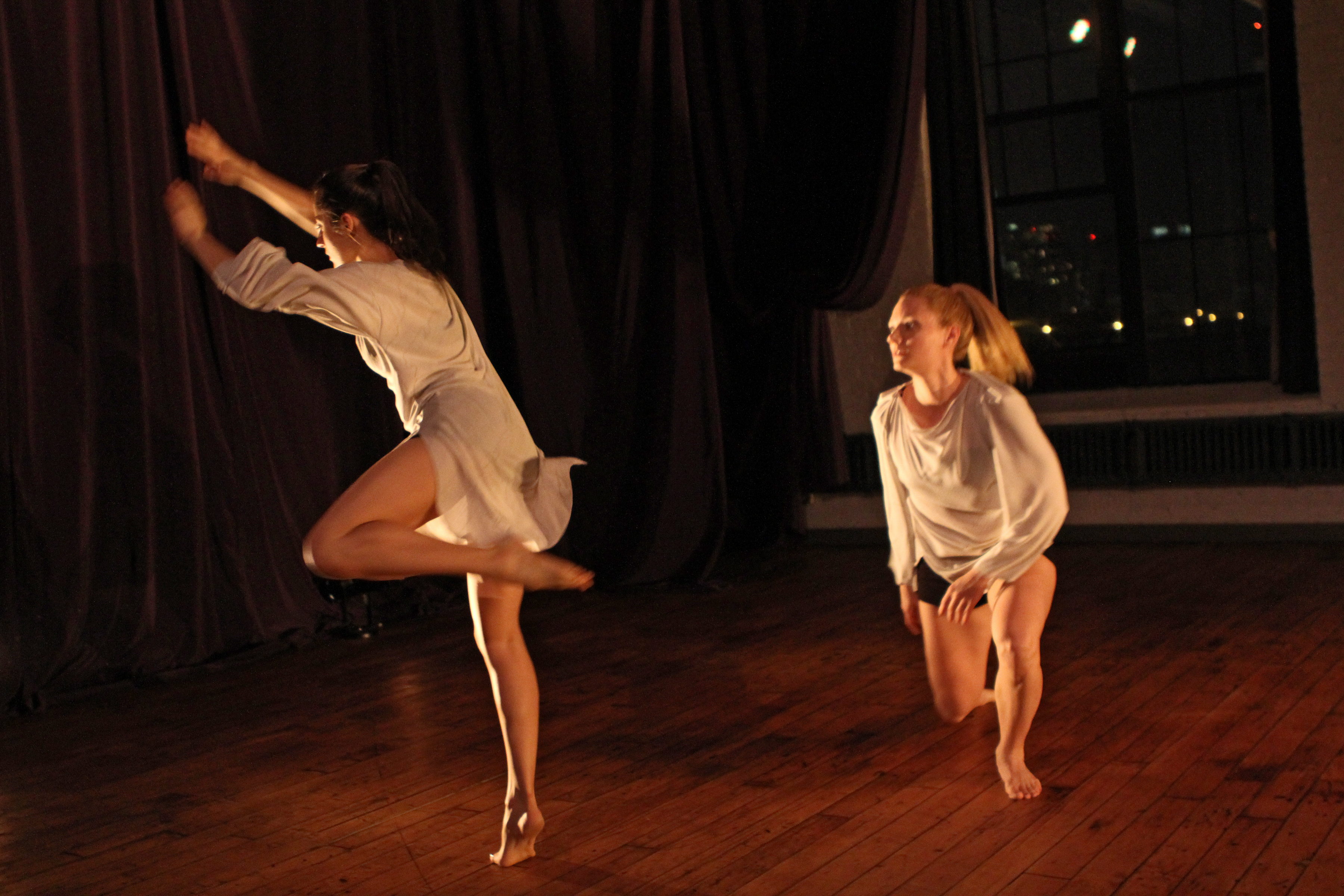
“Wallflower” by Barbara Mahler, the choreographer starts against the back wall in jeans, glitter earrings in her ear. She’s lean, mature, with a short salt-and-pepper haircut. She tries out shapes against the back wall efficiently. In walks Rachel Thorne Germond, a tall soft dancer. She curves, Barbara angles; they move without creating meaning. Then Rachel hooks Barbara’s elbows into a hold against her chest – they are chest to chest, face to face – and lowers Barbara to the floor, open and exposed, in a significant action. As they continue a duet, Barbara’s role reminds me of a Balanchine ballerina: the story is about her as she is pretzeled and promenaded. As the piece ends, Barbara gains ground, and becomes both story and teller.” – CLARE BYRNE
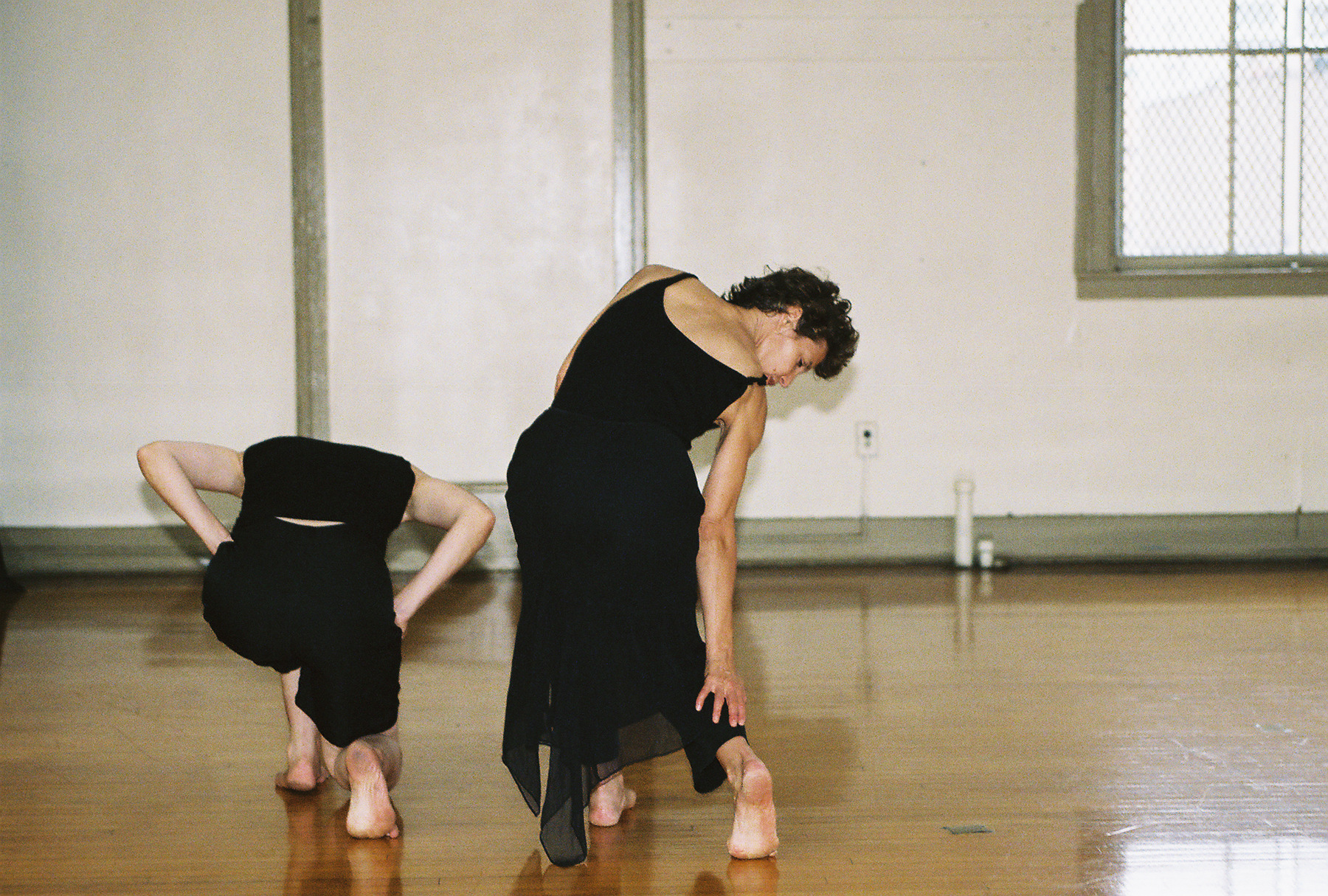
photo by julie lemberger
RESIDENCIES/WORKSHOPS :
Residencies at dance centers and festivals are multifaceted. They can consist of performances, workshops in Klein Technique , and workshops in improvisation towards composing.
Vienna, Austria, and Limerick, Ireland 2015(?)
IDA – Independant Dance, UK 2013/14
Jaffa, Isreal with Yasmeen Godder and Company 2015
Clancy Dance Works – Silver Springs Maryland
Wilson College, PA
Iceland Arts Academy, Dance Atalier, and the National Contemporary Dance Company – September and November 2012
Teaching and Performance Residency in Valparaiso and Santiago, Chile – 2011- //www.gam.cl/danza/barbaramahler-
Skolen for Moderne Danse- Copenhagen, Denmark – ongoing teaching artist 1994-2015
Gothenburg, Sweden – workshop with focus on the re-education of movement patterns followed by dance technique and improvisational studies. May 2010
Schwelle 7, in Wedding Berlin. Workshops 2010-2016
Circuit-Est.- Montreal, Canada –workshops – 2000,03,05, 10
Tangente, Dena Davida – Montreal, Canada 1999, 1996 A shared evening of dance, and a Solo Evening of Dance
Studio 303, Montreal Cananda – many performances in the beautiful studio space
Ashland, Oregon –workshops in Klein Technique both as intensive study and its relationship and application to dancing. June and October 2009, June 2010, April 2011
Stockholm, Sweden through Danse Alliensen – December 2006, May 2009,2010,2012
Minneapolis, MN-University of Minnesota, New Dance Lab, Zenon Dance Company School, and Rosy Simas/Dances – 1993-2019 l Workshops and or open classes in Klein Technique, Zero Balancing 1 and 2, and zero balancing sessions
Guest artist at the University of Milwaukee/Wisconsin Graduate Division June 2009
“ Performatica’ – Puebla, Mexico – a festival of artists coming together and sharing work of all aesthetics, attended by people from all over the world – March 2008
“LaborGras” and the “University of Berlin” – a co-production for a workshop, lecture and solo showing -April, December 2008
The first annual Dance Festival at OSU, Columbus Ohio. – A festival of all day movement/dance classes culminating in a final performance involving students, faculty and members of the dance community. An artist exchange in connection with Movement Research’s Artist in Residence Program – June 2008. Chair – Susan Petry
SFIDA – In Seattle -an annual festival involving teachers of all somatic forms, how it becomes personified in their choreography for students of all dance forms July 2009
QUOTES
” I loved the stillness in the beginning. You were in a striking shape that really sparked the curiosity of the audience. I loved how long you stayed on the floor. What stays with me most from the piece is the clarity of focus in both your face and body; the pauses and syncopated rhythms in the movement; the sudden ending with the strong toss back of your head. but what I always love about your work is the care you take with crafting your body-the space-your body in space. Your minimalist approach to sound magnifies the texture and qualities of the movement – movement which is highly developed and often unexpected. And there’s a directness or honesty in this sparseness that is centering for the viewer” dancer
“Beautifully choreographed and beautifully danced. This abstract piece evoked warm feelings related to relationships and just “being.” This piece deliciously points in the direction of ways in which abstract art can become a universal expression of deep felt emotions.” Professor Jana Feinman – Hunter College, NYC
“Barbara’s work is typified by clarity of movement and an uncommon exactitude. The dancers appeared as though they come from a mutual understanding of the body.
Barbara Mahler defies any expectations of when a dancer’s “prime” might be. As articulate and flexible as any dancer, she has a clear voice as a performer. Her technique is clear through her movement. In “The Ground Underneath” her abstract movements juxtaposed against a nature-based sound score create a subtle tension waiting to be resolved. ” Pete Chamberlain- dancer/doctor
“Barbara Mahler both a creator at the top of her form, with full command of her craft, and an evolving, ever-developing artist full of surprise. Through movement, she’s able to transcend a conscious world and move beyond what even she knows. I think this can happen because she has committed to taking the time necessary to practice, practice, practice, bringing the body‘s subconscious up to a conscious level to then be able to tap back into the subconscious and continually operate on the cusp of both worlds. It is this “searching” commitment of a true practitioner that keeps Barbara on track and clear of the passing fashions of the moment and I strongly believe that supporting work of such integrity is good for the field!” Wally Cardona, choreographer/dancer
“Every iota of energy Mahler manufactures is perfectly directed and apportioned in just the right dosage to accomplish the required action. It’s the complete lack of kinesthetic verbiage that makes Mahler’s dancing utterly perspicuous.”
L.J. Sagolla, Backstage, NYC.
“Highly nuanced….”
Dance Insider, NYC
About “The Whispering Pages-short dances in white all in a row – “Her dance is a delicate rhythm familiar from most of our lives – moments of supreme wonder alternate with moments of supreme despair, and between the two, only a simple desire for balance”
Kathleen Duffy, Chicago
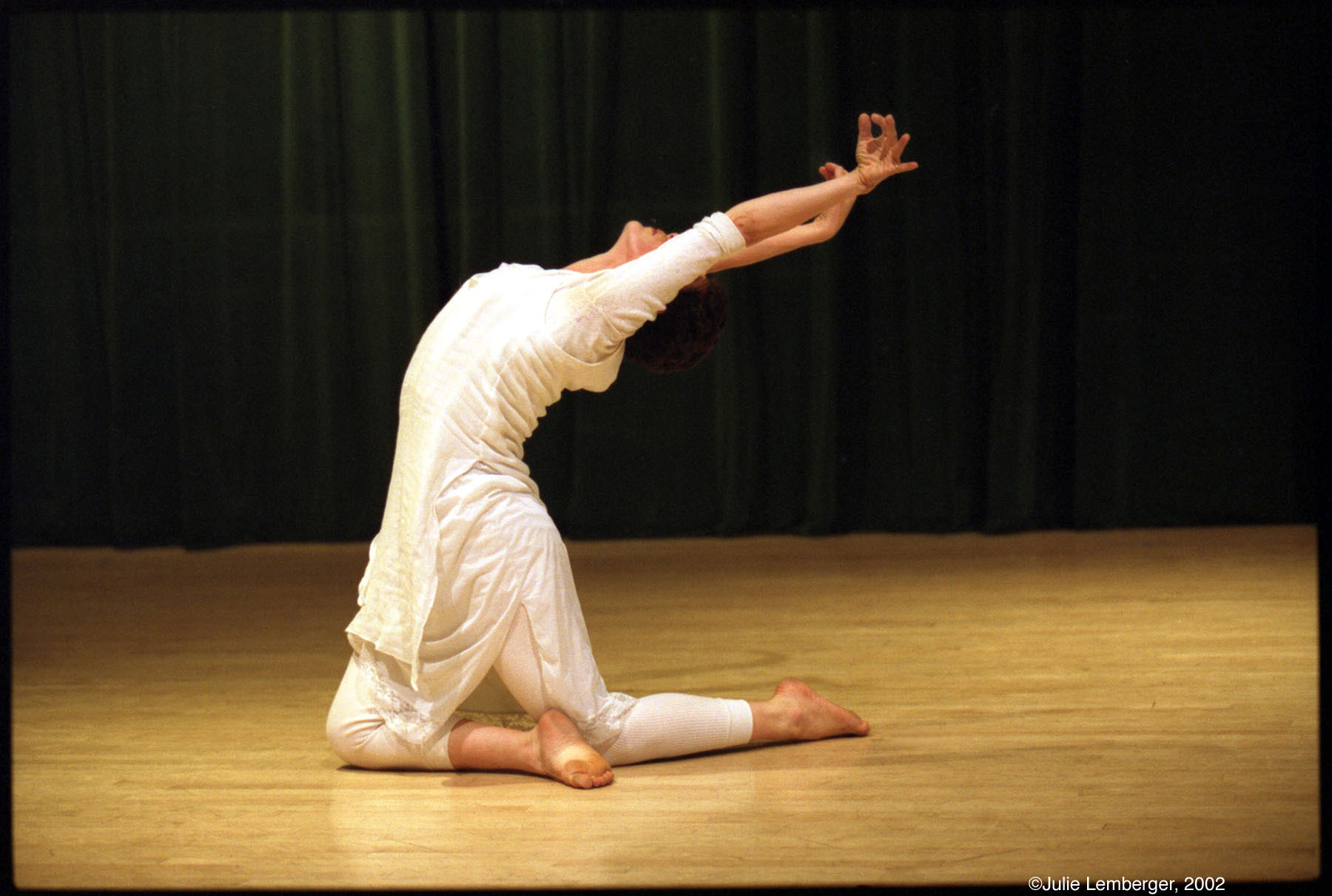
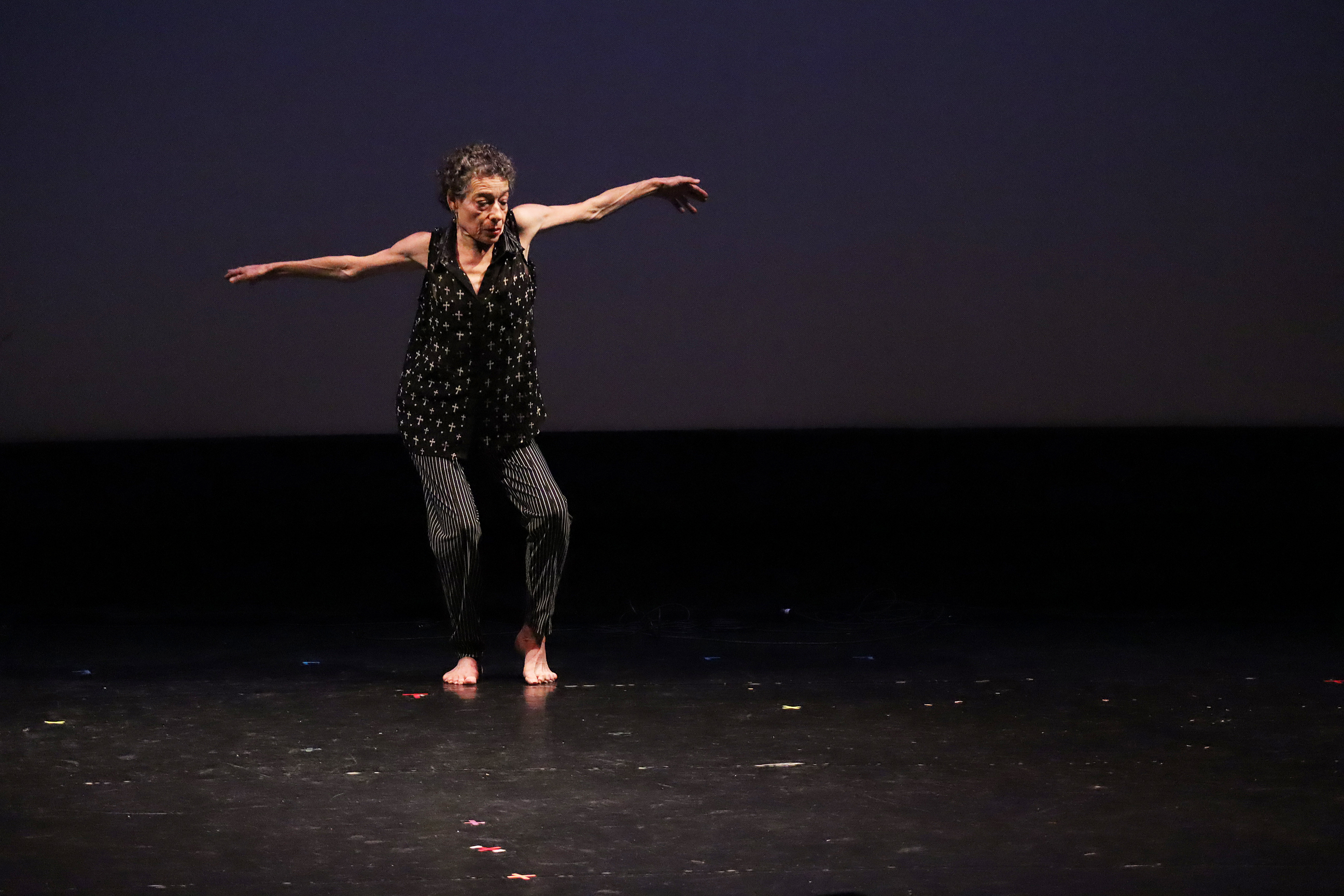
photo – @QueensTheater -October 2022 by Josef Pinloc—-Queensboro Dance Festival
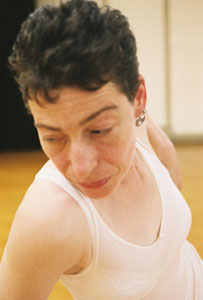

 Barbara Mahler